---
title: Could This Be the Last Time We Fall Back? | WeatherBug | WeatherBug
description: Clocks fall back November 1, but a proposed law could change how we experience daylight year-round.
canonical: https://www.weatherbug.com/news/Could%20This%20Be%20the%20Last%20Time%20We%20Fall%20Back
og:title: Could This Be the Last Time We Fall Back? | WeatherBug | WeatherBug
og:description: Clocks fall back November 1, but a proposed law could change how we experience daylight year-round.
og:url: https://www.weatherbug.com/news/Could%20This%20Be%20the%20Last%20Time%20We%20Fall%20Back
og:site_name: WeatherBug
og:locale: en_US
og:image: https://cms-assets-con.cdn.weatherbug.net/assets/contentitems/31/31295074-8322-4664-9dac-4e4f0e0dc22b/52e0ce98-d40a-4283-82d1-d0fe816ebf4b/4e0465bf-99ab-4292-b4d5-6a226696029a.png
og:image:width: 800
og:image:height: 600
og:image:alt: Clocks fall back November 1, but a proposed law could change how we experience daylight year-round.
og:type: article
article:published_time: 2026-10-26T20:00:51Z
article:modified_time: 2026-10-26T20:00:51Z
article:author: By WeatherBug Meteorologist, Brittney Gomez
article:tag: daylight saving time
article:tag: fall back
article:tag: clocks
article:tag: sleep
article:tag: fall
article:tag: halloween
twitter:card: summary_large_image
twitter:title: Could This Be the Last Time We Fall Back? | WeatherBug
twitter:description: Clocks fall back November 1, but a proposed law could change how we experience daylight year-round.
twitter:image: https://cms-assets-con.cdn.weatherbug.net/assets/contentitems/31/31295074-8322-4664-9dac-4e4f0e0dc22b/52e0ce98-d40a-4283-82d1-d0fe816ebf4b/4e0465bf-99ab-4292-b4d5-6a226696029a.png
---
[](/)
[Back to forecast](/)
# Could This Be the Last Time We Fall Back?
October 26, 2026 at 04:00 PM EDT
By WeatherBug Meteorologist, Brittney Gomez
Get ready for an extra hour of sleep this weekend! Daylight saving time ends Sunday, November 1, at 2 a.m. for most of the United States.
That means earlier sunrises, but also earlier sunsets. And with winter approaching, those already-short evenings are about to feel even shorter.
But could this be one of the last times we change our clocks?
## What Is the Sunshine Protection Act?
The Sunshine Protection Act is proposed federal legislation that would make daylight saving time permanent for most of the country, eliminating the twice-yearly clock changes.
In July 2026, the bill passed the U.S. House of Representatives with a 308–117 vote. However, it still needs Senate approval before becoming law.
## What Would Permanent Daylight Saving Time Look Like?
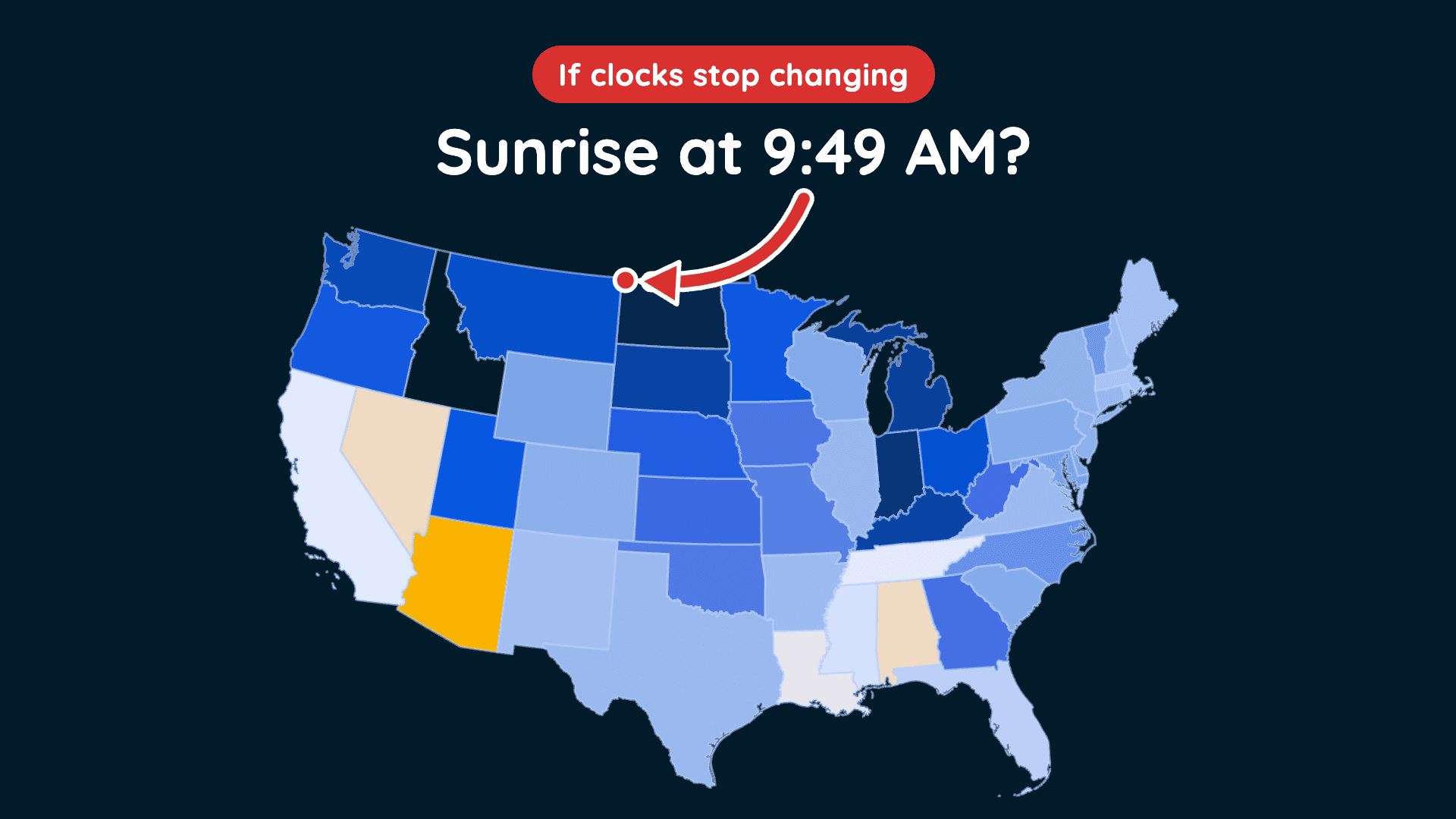
🌅 **Darker Winter Mornings:** In early January, some cities wouldn't see sunrise until after 9 a.m., while many others would wait until after 8 a.m.
🌇 **Brighter Winter Evenings:** Those early December sunsets would shift an hour later on the clock. Instead of the sun setting at 4:30 p.m., it would set at 5:30 p.m.
☀️ **Summer Stays the Same:** Since we already observe daylight saving time during summer, sunrise and sunset times wouldn't change during those months.
## Would You Support the Change?
Permanent daylight saving time wouldn't give us more daylight. It would simply shift an hour of winter daylight from the morning to the evening.
So which would you prefer: brighter winter mornings or more daylight after work?
For now, don't forget to turn your clocks back this Sunday!
We use technologies, such as cookies, to analyze your use (i.e., pages visited), to customize content, for our internal analytics purposes and for security and other purposes. By continuing to use this website, you agree to this usage. Please review our [privacy policy](/legal/privacy) for more details as well as for information on how to contact us to object to these activities. [Ad Choices](/legal/privacy#digitaladvertisingandyourchoices)
```json
{"@context":"https://schema.org","@type":"NewsArticle","mainEntityOfPage":{"@type":"WebPage","@id":"https://www.weatherbug.com/news/Could This Be the Last Time We Fall Back"},"headline":"Could This Be the Last Time We Fall Back?","description":"Clocks fall back November 1, but a proposed law could change how we experience daylight year-round.","image":["https://cms-assets-con.cdn.weatherbug.net/assets/contentitems/31/31295074-8322-4664-9dac-4e4f0e0dc22b/52e0ce98-d40a-4283-82d1-d0fe816ebf4b/4e0465bf-99ab-4292-b4d5-6a226696029a.png"],"datePublished":"2026-10-26T20:00:51Z","dateModified":"2026-10-26T20:00:51Z","dateCreated":"2026-10-26T20:00:51Z","articleSection":"Weather News","keywords":"daylight saving time,fall back,clocks,sleep,fall,halloween","articleBody":"Get ready for an extra hour of sleep this weekend! Daylight saving time ends Sunday, November 1, at 2 a.m. for most of the United States.
That means earlier sunrises, but also earlier sunsets. And with winter approaching, those already-short evenings are about to feel even shorter.
But could this be one of the last times we change our clocks?
What Is the Sunshine Protection Act?
The Sunshine Protection Act is proposed federal legislation that would make daylight saving time permanent for most of the country, eliminating the twice-yearly clock changes.
In July 2026, the bill passed the U.S. House of Representatives with a 308–117 vote. However, it still needs Senate approval before becoming law.
What Would Permanent Daylight Saving Time Look Like?
🌅 Darker Winter Mornings: In early January, some cities wouldn't see sunrise until after 9 a.m., while many others would wait until after 8 a.m.
🌇 Brighter Winter Evenings: Those early December sunsets would shift an hour later on the clock. Instead of the sun setting at 4:30 p.m., it would set at 5:30 p.m.
☀️ Summer Stays the Same: Since we already observe daylight saving time during summer, sunrise and sunset times wouldn't change during those months.
Would You Support the Change?
Permanent daylight saving time wouldn't give us more daylight. It would simply shift an hour of winter daylight from the morning to the evening.
So which would you prefer: brighter winter mornings or more daylight after work?
For now, don't forget to turn your clocks back this Sunday!
","author":{"@type":"Person","name":"By WeatherBug Meteorologist, Brittney Gomez","url":"https://www.weatherbug.com"},"publisher":{"@type":"Organization","name":"WeatherBug","logo":{"@type":"ImageObject","url":"https://www.weatherbug.com/images/sharing/f1ff28ba-6f06-4745-a782-011a20397e16.png"}}}
{"@context":"https://schema.org","@type":"WebSite","mainEntityOfPage":{"@type":"WebPage","@id":"https://www.weatherbug.com/news/Could%20This%20Be%20the%20Last%20Time%20We%20Fall%20Back","relatedLink":"https://www.weatherbug.com/news/Could%20This%20Be%20the%20Last%20Time%20We%20Fall%20Back"},"name":"WeatherBug","url":"https://www.weatherbug.com/news/Could%20This%20Be%20the%20Last%20Time%20We%20Fall%20Back","headline":"Could This Be the Last Time We Fall Back?","description":"Clocks fall back November 1, but a proposed law could change how we experience daylight year-round.","dateModified":"2026-10-26T20:00:51Z","publisher":{"@type":"Organization","name":"WeatherBug","url":"https://www.weatherbug.com","sameAs":["https://www.facebook.com/WeatherBug","https://instagram.com/WeatherBug","https://www.linkedin.com/company/weatherbug","https://www.pinterest.com/weatherbug","https://twitter.com/WeatherBug","https://www.youtube.com/user/WeatherBugVideo"],"logo":{"@type":"ImageObject","url":"https://www.weatherbug.com/images/logos/weatherbug_logo_620x447.png"}},"author":{"@type":"Organization","name":"WeatherBug","url":"https://www.weatherbug.com","sameAs":["https://www.facebook.com/WeatherBug","https://instagram.com/WeatherBug","https://www.linkedin.com/company/weatherbug","https://www.pinterest.com/weatherbug","https://twitter.com/WeatherBug","https://www.youtube.com/user/WeatherBugVideo"],"logo":{"@type":"ImageObject","url":"https://www.weatherbug.com/images/logos/weatherbug_logo_620x447.png"}}}
{"@context":"https://schema.org","@type":"Organization","name":"WeatherBug","logo":"https://www.weatherbug.com/images/logos/weatherbug_logo_620x447.png","url":"https://www.weatherbug.com","sameAs":["https://www.facebook.com/WeatherBug","https://instagram.com/WeatherBug","https://www.linkedin.com/company/weatherbug","https://www.pinterest.com/weatherbug","https://twitter.com/WeatherBug","https://www.youtube.com/user/WeatherBugVideo"]}
```